10 Breakthrough Innovations by Microsoft Researchers Transforming Science, AI, and Sustainability.
Introduction :
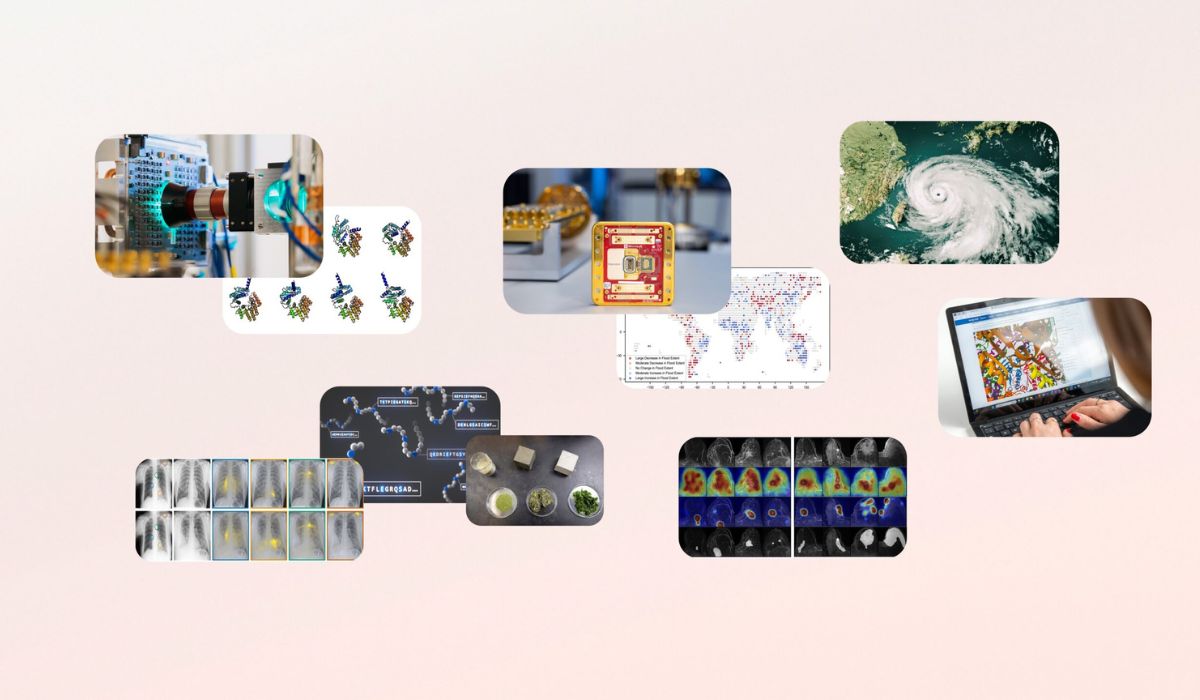
Artificial intelligence is rapidly becoming woven into the fabric of daily life — shaping industries, enhancing scientific discovery, and opening doors to innovations once considered science fiction. At the center of this transformation, Microsoft Researchers are pushing scientific boundaries with groundbreaking discoveries across healthcare, climate science, quantum computing, life sciences, sustainable materials, security, and advanced computing.
In 2025, Microsoft published multiple peer-reviewed papers that showcased how AI and emerging technologies can tackle some of the world’s most complex challenges. From encoding quantum phenomena into new chips to predicting environmental patterns with incredible precision, their work highlights how AI can accelerate problem-solving across industries like banking, biotechnology, energy, and wellness.
1. Majorana 1: A New Era of Quantum Processing:
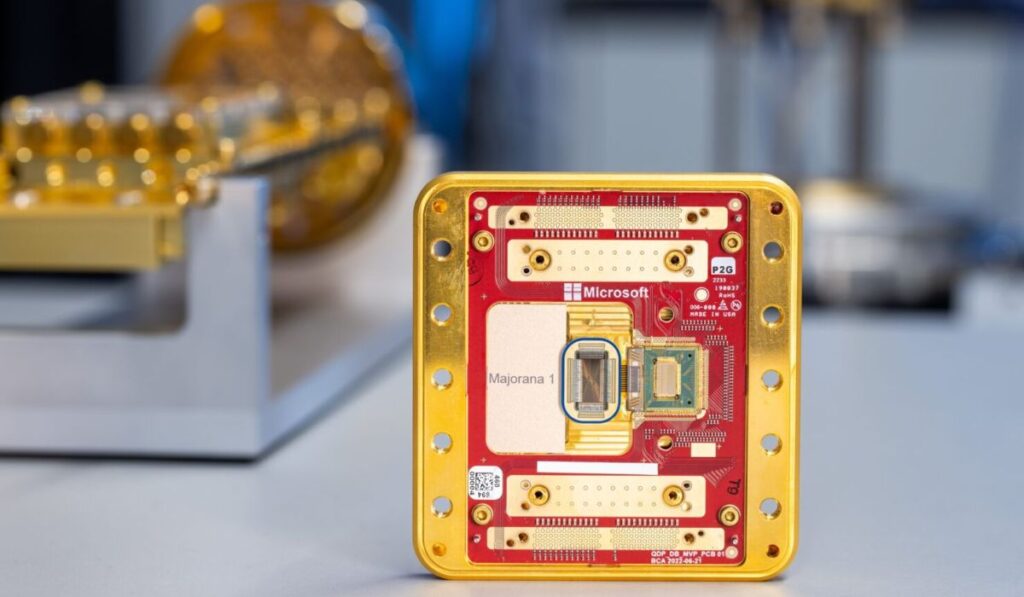
Quantum computing has long been championed as the next frontier in computation. Yet, the biggest roadblock has always been building qubits stable enough to perform real-world calculations. In a landmark breakthrough, Microsoft Researchers announced Majorana 1, a quantum processor built using an entirely new qubit architecture.
Self-Healing Materials & Next-Gen Industrial Solutions.
Imagine bridges that repair micro-cracks on their own or catalysts capable of transforming pollution into useful chemical compounds. These visions, previously theoretical, may soon be achievable through quantum-powered simulations driven by Majorana qubits.
Topoconductors: A Material Breakthrough.
The team created the world’s first topoconductor, a new class of material capable of manipulating Majorana particles. Because topological qubits possess built-in error protection, they can remain stable long enough to solve complex, industrial-scale problems in:
- Climate modeling
- Chemical synthesis
- Drug development
- Agricultural optimization
This leap forward drastically shortens the timeline for practical quantum computing — from decades to years.
2. BioEmu-1: Revolutionizing Protein Science With Ultra-Fast Stability Predictions:
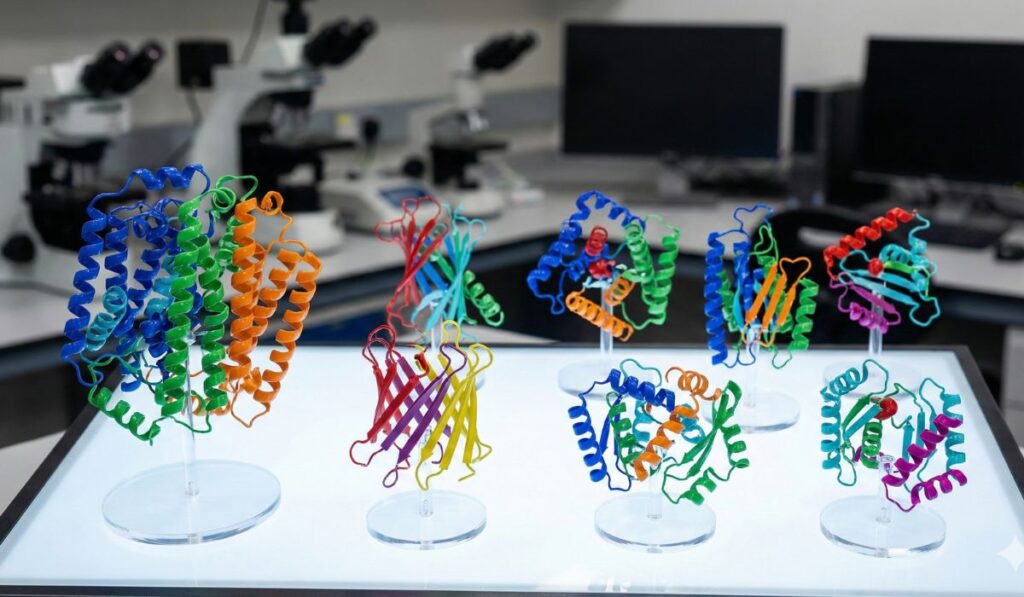
Proteins are the machinery of life. Understanding their dynamic shapes is essential for designing new drugs, therapies, and biotechnological tools. Traditional simulations for protein flexibility often require years of computational time, making rapid experimentation nearly impossible.
Introducing BioEmu-1.
Microsoft Researchers developed Biomolecular Emulator-1 (BioEmu-1) — a generative deep-learning model capable of generating thousands of protein structure variations in hours.
Why This Matters.
BioEmu-1 helps scientists:
- Predict how proteins rearrange their structure
- Identify stable and unstable regions
- Understand disease-causing mutations
- Design more effective and targeted therapeutics
This tool bridges the gap between static protein structures and their dynamic real-world behavior, accelerating medical research dramatically.
3. MatterGen & MatterSim: Accelerating Materials Discovery With AI:
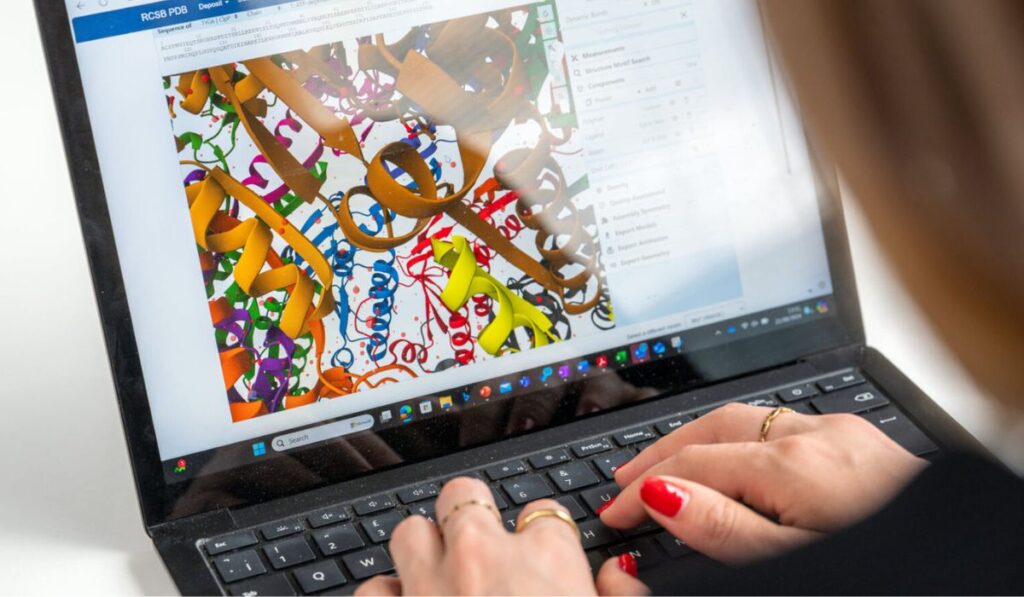
Discovering new materials traditionally requires years of experiments and high-cost laboratory equipment. AI is changing that entire workflow.
MatterGen: AI-Powered Material Generation.
MatterGen works like an AI image generator — but for atoms. Based on specific requirements (conductivity, durability, magnetism), the model rearranges 3D atomic structures to propose realistic new compounds.
MatterSim: Rapid Property Evaluation.
MatterSim evaluates how these new materials might perform, creating a fast feedback loop:
- MatterGen proposes a new structure
- MatterSim tests its properties
- The cycle repeats until optimal materials emerge
Why This Is a Game-Changer ?
Materials used in batteries, fuel cells, semiconductors, and clean energy solutions could be designed in months instead of decades. These advancements pave the way for:
- Longer-lasting EV batteries
- Efficient solar cells
- Stronger, lightweight alloys
- Sustainable manufacturing materials
4. RAD-DINO: Merging X-Ray Imaging and AI for Faster Healthcare Decisions:
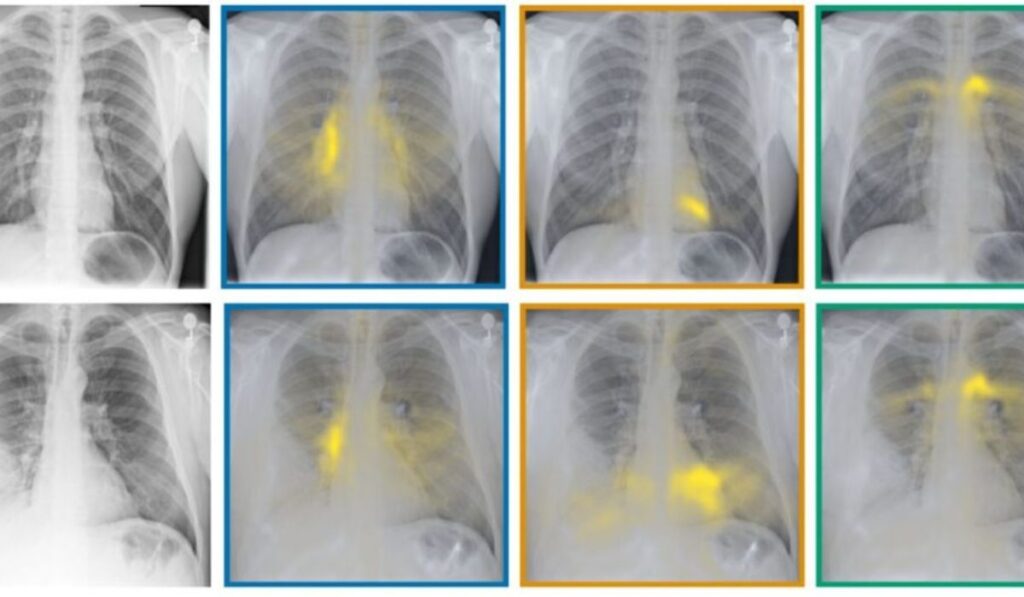
Medical imaging is one of the most time-sensitive areas in healthcare. Delays in analysis can directly impact patient outcomes. Microsoft Researchers, in collaboration with Mayo Clinic, developed RAD-DINO — a multimodal model trained on both text and X-ray images.
How RAD-DINO Works.
The AI identifies anatomical similarities and overlays heatmaps showing areas of importance. This gives medical professionals clearer, more comprehensive insights.
Potential Impact.
- Faster radiology reporting
- Reduced diagnostic errors
- Improved support for complex cases
- More consistent interpretations between clinicians
While AI will not replace radiologists, tools like RAD-DINO enhance their capabilities, especially in high-pressure environments.
5. Aurora: An AI Model for Climate, Weather, and Environmental Forecasting:
Predicting weather and environmental events is essential for agriculture, disaster prevention, logistics, and energy management. Traditional forecasting models rely on supercomputers requiring hours to process data.
Aurora’s Breakthrough.
Aurora uses AI to produce environmental predictions at unprecedented speed — generating forecasts in seconds, not hours.
Beyond Weather.
Aurora can predict:
- Air pollution levels
- Ocean wave patterns
- Cyclone development
- Rainfall distribution
- Environmental hazards
Because it processes over a million hours of training data, Aurora is both highly accurate and extremely energy-efficient compared to legacy systems.
6. FCDD: Smarter Breast Cancer Screening With AI:
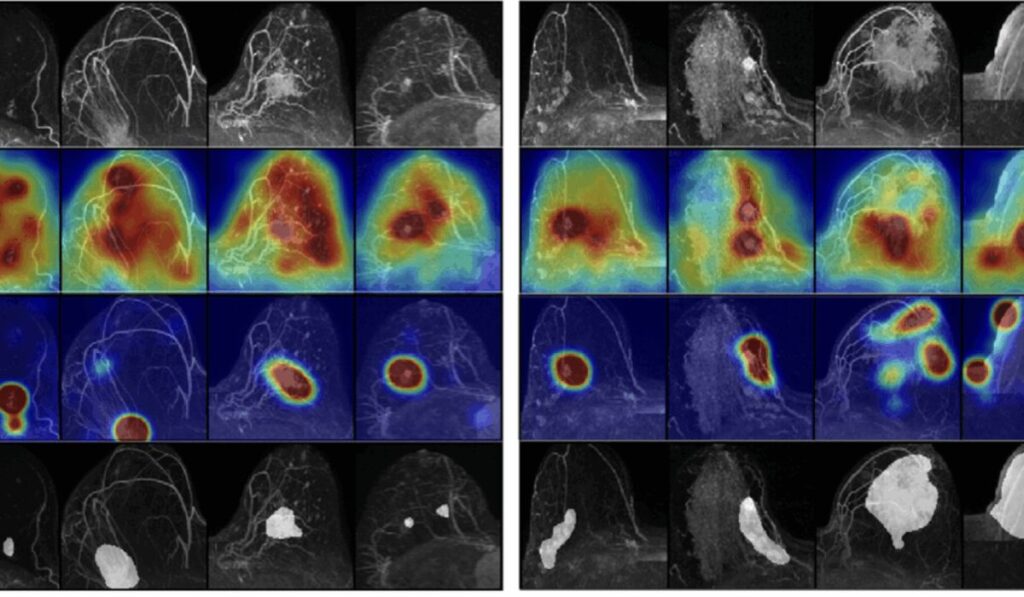
Breast cancer is easier to treat when detected early, but current screening methods often produce false positives — especially in women with dense breast tissue.
FCDD: Fully Convolutional Data Description.
Developed alongside University of Washington and Fred Hutchinson Cancer Center, FCDD produces detailed MRI heatmaps to highlight potential tumors.
Why This Matters.
- Reduces false positives
- Helps radiologists evaluate difficult cases
- Offers better screening pathways for high-risk individuals
- Improves accuracy for dense breast tissue patients
This model is open-source, allowing global researchers to build upon the work.
7. Seaweed-Based Low-Carbon Concrete: A Sustainable Construction Innovation:
Concrete is everywhere, but its environmental footprint is staggering. Cement production accounts for more than 8% of global carbon emissions.
A Seaweed-Enhanced Solution.
Microsoft partnered with University of Washington to develop a new concrete blend using dried, powdered seaweed.
Benefits
- Seaweed absorbs atmospheric carbon as it grows
- Concrete mixing becomes 21% less carbon-intensive
- Production time for new formulas reduced from 5 years to 28 days using ML
This innovation could reshape sustainable construction for the future.
8. AI Mapping Floods From Space — Even Through Clouds:
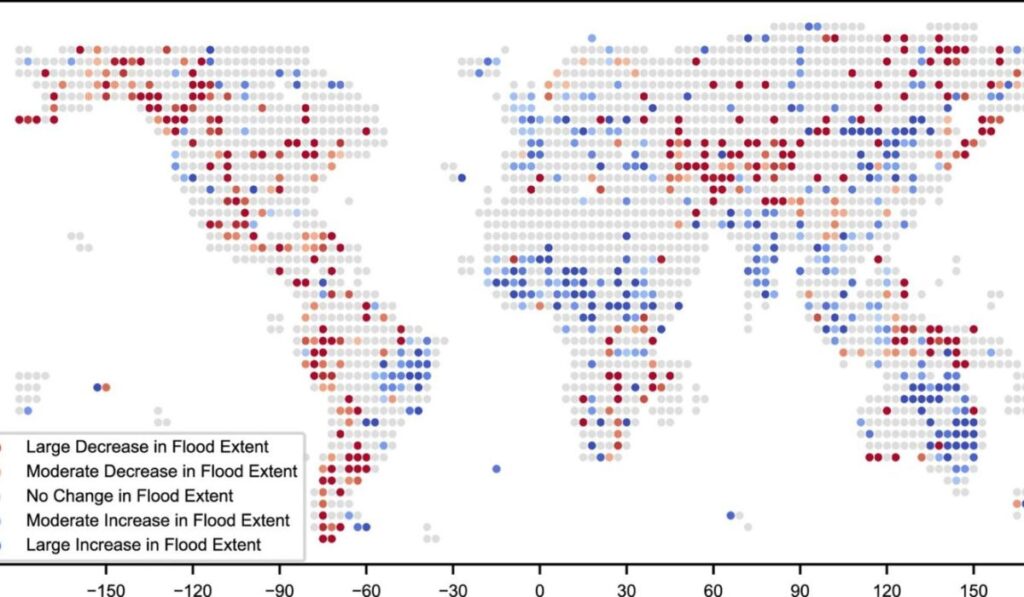
Flood prediction is essential for disaster management, but traditional satellites struggle with cloud cover.
Deep Learning + Radar Imaging.
Using radar data from advanced Earth observation satellites, Microsoft Researchers developed a model that maps flood zones even during storms and nighttime conditions.
Impact.
- Created a 10-year global flood dataset
- Helps governments plan infrastructure
- Supports emergency response teams
- Reveals emerging flood trends worldwide
The data and code were made publicly accessible for global collaboration.
9. Analog Optical Computer (AOC): Using Light to Process AI Faster:
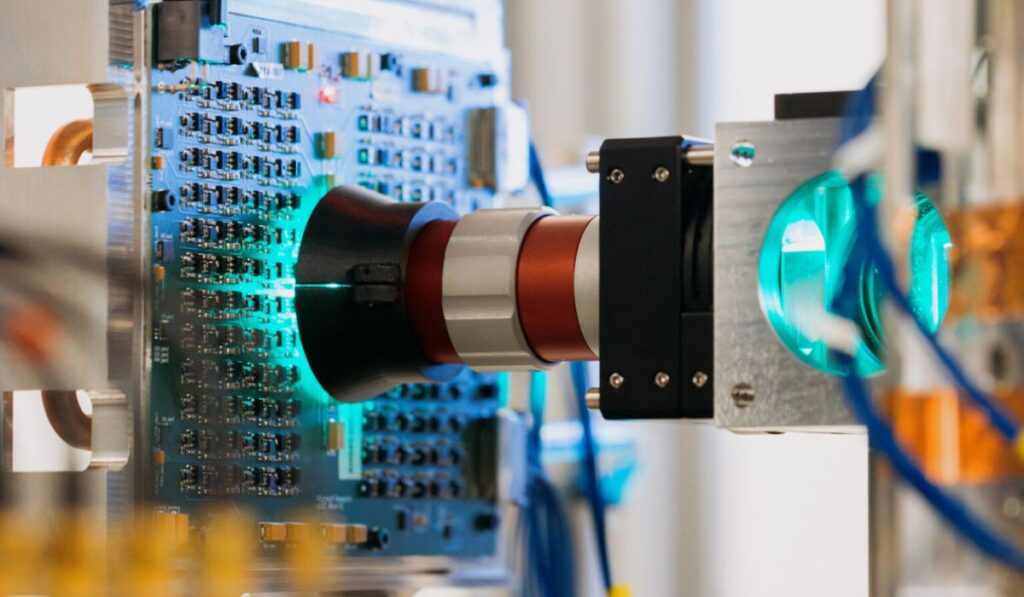
As AI models grow in size, energy consumption becomes a major concern. Microsoft Researchers introduced an analog optical computer that uses light instead of electrical signals to solve optimization problems.
Advantages.
- Ultra-high speed
- Significantly lower energy usage
- Built using affordable, scalable components like micro-LEDs
Real-World Applications.
- Faster MRI scans
- Optimized banking settlement processes
- Energy-efficient AI inference
This prototype hints at a future where optical computing complements or even surpasses GPUs.
10. Securing Biological Research With Tiered AI Access:
AI is now capable of generating biological insights, but this also introduces biosecurity risks. To address this, Microsoft Researchers led a confidential two-year study to create a responsible access framework.
Key Contributions :
- A multi-stakeholder review involving global biosecurity experts
- Guidelines for safe sharing of biological AI tools
- A tiered-access system approved by the International Biosecurity and Biosafety Initiative for Science (IBBIS)
- A publishing approach ensuring beneficial research continues without enabling misuse
This marks the first time a major scientific journal endorsed such an approach.
Conclusion:
The innovations led by Microsoft Researchers in 2025 reflect a profound shift toward AI-powered scientific discovery. Their breakthroughs span nearly every field — from sustainable materials and medical imaging to quantum chips and secure biological research.
These advancements pave the way for a future where:
- Climate predictions are hyper-precise
- Healthcare is faster and more reliable
- Quantum computers solve previously impossible problems
- Materials for the next century are discovered in weeks
- AI research proceeds safely and responsibly
With their commitment to open science, sustainability, and global collaboration, Microsoft’s research teams continue to redefine what technology can achieve.
*Source : news.microsoft.com
**Also see : Microsoft Store Awards 2025
- Feature Image Credit : Microsoft.